Best Home Espresso Setup for Beginners (2026 Guide)
Best First Espresso Machine Setup
Quick Answer
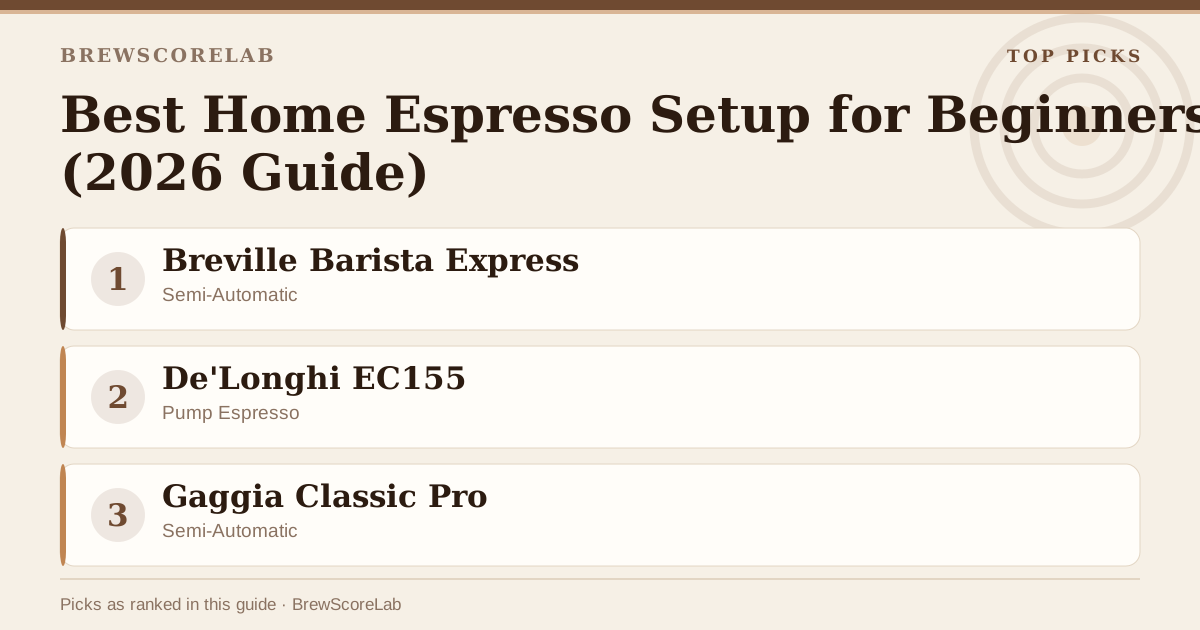
For beginners, I recommend the Breville Barista Express (BES870XL) – Breville’s spec sheet covers the built-in conical burr grinder and steam wand for under $600. Grab a decent tamper, milk jug, and coffee scale, and you’re set.
BrewScore™ Ratings
Our proprietary score based on extraction quality, temperature stability, ease of use, build durability, and value-per-dollar.
De’Longhi EC155 — 76/100 (Great)
███████████████░░░░░
Gaggia Classic Pro — 10/100 (Below Average)
██░░░░░░░░░░░░░░░░░░
Scores are calculated from publicly available specs including extraction quality, temperature stability, build durability, and value. Learn about our methodology.
Understanding Espresso Machines
Espresso machines run the gamut from bare-bones manual models to fancy automatic systems. Here’s what you need to know about each type:
Types of Espresso Machines
- Manual Espresso Machines: You control everything, which means maximum control but a steep learning curve. Skip these unless you’re already obsessed with coffee.
- Semi-Automatic Machines: You handle the grind and tamp, the machine manages water flow. Perfect sweet spot for beginners who want to learn.
- Automatic Machines: These control water volume for you. User-friendly and great if convenience matters more than full control.
- Super-Automatic Machines: They do everything – grind, brew, clean. Easy but expensive, and honestly, the coffee often tastes a bit sterile.
Essential Accessories for Your Setup
The machine is just the start. You’ll need these extras, including best espresso accessories for beginners:
- Coffee Grinder: A burr grinder is non-negotiable for consistent grind size, so consider our recommendations for the best coffee grinder for espresso. Adjustable settings are a must.
- Tamper: Get a 58mm stainless steel tamper for even coffee distribution. Cheap plastic ones are worthless.
- Milk Frother: If you want lattes or cappuccinos, you need either a steam wand or separate frother.
- Coffee Scale: Precision matters in espresso. A digital scale helps you nail the dose every time.
- Water Filter: Good water makes better coffee and prevents mineral buildup that’ll kill your machine.
Recommended Espresso Machines for Beginners
These machines balance quality, usability, and price, and they line up closely with this year’s beginner espresso machine rankings:
| Model | Type | Price Tier | Grind Type | Boiler System | Dimensions (inches) |
|---|---|---|---|---|---|
| Breville Barista Express | Semi-Automatic | Mid-range | Built-in Burr Grinder | Single Boiler | 12.5 x 13.5 x 15.8 |
| De’Longhi EC155 | Pump Espresso | Budget | N/A | Thermoblock | 11.1 x 8.7 x 10.2 |
| Gaggia Classic Pro | Semi-Automatic | Budget | N/A | Single Boiler | 9.5 x 14.2 x 16.5 |
| Rancilio Silvia | Semi-Automatic | Premium | N/A | Single Boiler | 9.2 x 11.4 x 13.4 |
Pros and Cons of Each Machine
Breville Barista Express (BES870XL)
- Pros:
- Built-in grinder saves counter space and simplifies workflow
- Beginner-friendly interface with helpful indicators
- Solid steam wand that actually froths milk properly
- Cons:
- Pricey for a starter machine
- Cleaning routine is more involved than simpler models
De’Longhi EC155
- Pros:
- Dirt cheap and compact
- Dead simple to operate
- Cons:
- No grinder means you’ll need to buy one separately
- Weak steam wand struggles with milk
Gaggia Classic Pro
- Pros:
- Built like a tank – this thing will outlast you
- Great stepping stone for aspiring home baristas
- Cons:
- You’ll need a separate grinder (add $200+ to the budget), so check out our guide on the best budget espresso grinder for beginners.
- Tiny water tank means frequent refills
Rancilio Silvia
- Pros:
- Commercial-grade components in a home package
- Perfect if you’re serious about espresso from day one
- Cons:
- Expensive and temperamental for beginners
- Temperature surfing required for consistent shots
Brewing Your First Espresso
Here’s how to pull your first shot:
- Measure: Weigh out 18-20 grams of fresh beans for a double shot
- Grind: Use a fine setting and grind right before brewing
- Tamp: Press down with about 30 pounds of pressure (firm but not crazy)
- Brew: Lock in the portafilter and aim for 25-30 seconds extraction time
- Taste: Adjust grind size and technique for your next attempt
Maintenance and Care for Your Espresso Machine
Keep your machine happy with regular upkeep:
- Daily: Rinse the portafilter and run water through the group head after use
- Weekly: Descale if you have hard water (check your manual for the right solution)
- Monthly: Deep clean the steam wand and replace water filters
FAQ
What’s the best grind size for espresso?
Fine grind, like table salt. Too coarse and water rushes through; too fine and nothing comes out.
Do I need a separate grinder for espresso?
Built-in grinders are convenient, but a standalone burr grinder usually gives more consistent results. The Breville’s built-in unit is decent enough to start with.
How much does a good espresso machine cost?
Entry-level machines run $100-$800. You can get started around $100, but expect better results in the $400-600 range.
How long should an espresso shot take to brew?
25-30 seconds for a double shot. Much faster and it’s under-extracted (sour); much slower and it’s over-extracted (bitter).
Can I use regular coffee grounds for espresso?
You can use any coffee beans, but they need to be ground fine for espresso. Pre-ground coffee from the grocery store is usually too coarse.
Bottom Line
The Breville Barista Express hits the sweet spot for first-timers – decent grinder, solid build, and enough features to grow with your skills. Add the right accessories and practice your technique, and you’ll be making café-quality espresso at home in no time, especially if you follow our tips in the beginner home barista starter kit.