Breville Barista Express vs Barista Pro: Key Differences
Quick Verdict
The Breville Barista Pro wins if you want convenience and speed - that digital display and 3-second heat-up time are game changers. But the Barista Express is perfect for coffee lovers who enjoy the ritual and want to master their craft the traditional way.
At a Glance
| Feature | Breville Barista Express | Breville Barista Pro |
|---|---|---|
| Type | Semi-Automatic Espresso | Semi-Automatic Espresso |
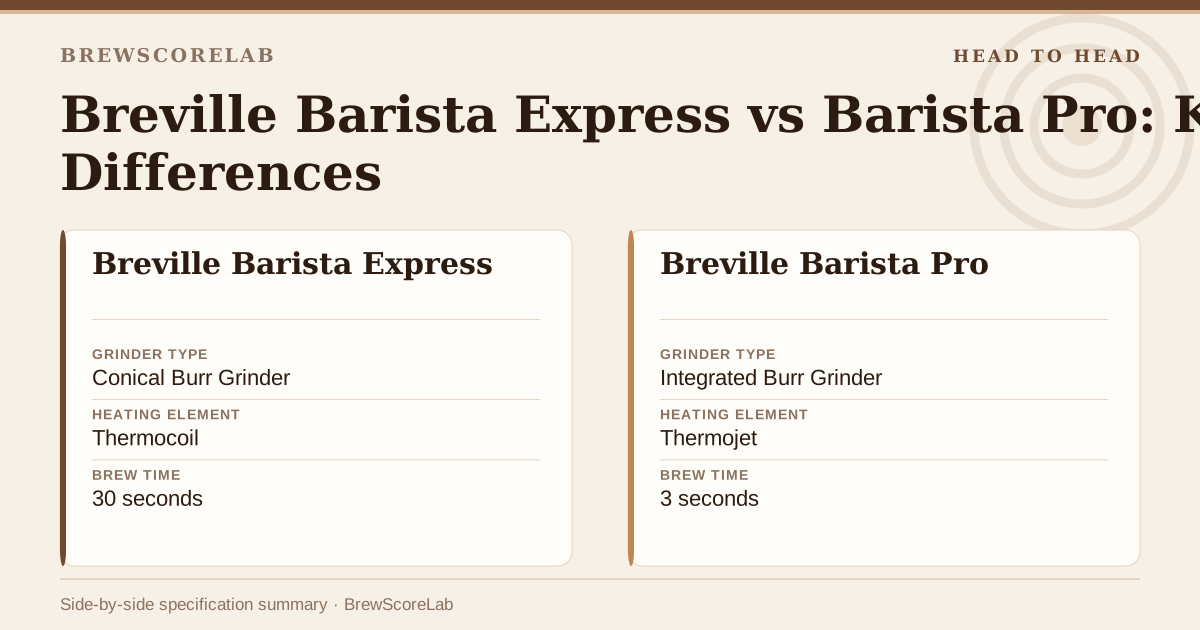
| Grinder Type | Conical Burr Grinder | Integrated Burr Grinder |
| Water Tank Capacity | 67 oz (2.0 L) | 67 oz (2.0 L) |
| Pump Pressure | 15 Bar | 15 Bar |
| Heating Element | Thermocoil | Thermojet |
| Brew Time | 30 seconds | 3 seconds |
| Steam Wand | Manual | Manual |
| Weight | 23 lbs (10.4 kg) | 20 lbs (9.1 kg) |
| Dimensions | 13.2 x 12.5 x 15.5 inches | 13.7 x 12.5 x 16.3 inches |
| Price Tier | Mid-range | Mid-range |
Design & Build Quality
Both machines nail the stainless steel construction - they’ll last years and look good doing it. The Express has that timeless coffee shop vibe with its polished finish, while the Pro goes for a more modern, streamlined look.
Here’s the thing about size: the Pro is actually lighter despite being slightly bigger, which surprised me. That extra space makes daily use more comfortable, though you’ll need more counter real estate—a trade-off shared by pretty much every espresso machine with a grinder built in.
Pros:
- Barista Express: Classic design, compact footprint.
- Barista Pro: Sleeker appearance, roomier workspace.
Cons:
- Barista Express: Looks a bit dated next to the Pro.
- Barista Pro: Takes up more counter space.
Performance
This is where the $100 price difference starts to make sense. Both pull excellent espresso shots with that 15-bar pump, but the Pro’s thermojet heating is genuinely impressive - 3 seconds versus 30 is huge if you’re making multiple drinks. Breville claims the ThermoJet system in the Pro also draws up to 32% less energy annually than the thermoblock design it replaced, so the speed isn’t costing you anything on the meter.
The Pro’s PID temperature control keeps things more consistent, which matters if you’re switching between different beans or brewing back-to-back shots, making it essential to use the best coffee beans for espresso machine for optimal results.
Pros:
- Barista Express: Solid, reliable espresso every time.
- Barista Pro: Lightning-fast heating, precise temperature control.
Cons:
- Barista Express: That 30-second wait gets old fast.
- Barista Pro: All those features can feel overwhelming at first.
Grinder Noise Compared
Both are reasonably quiet, but the Pro’s grinder runs noticeably quieter. If you’re grinding beans at 6 AM while others are sleeping, you’ll appreciate the difference. The Express isn’t obnoxiously loud, but it’s definitely more noticeable.
Resolution is the bigger story, though. Breville lists 16 grind settings on the Express against 30 settings on the Pro, and the Pro’s burrs are Baratza European precision burrs. More steps between “gusher” and “choked” is exactly what you want when you’re dialling in a new bag.
Pros:
- Barista Express: Decent noise levels overall.
- Barista Pro: Quieter grinding operation.
Cons:
- Barista Express: Grinder can wake the house.
- Barista Pro: None, really - this one’s pretty quiet.
Cleaning Cycles & Filter Costs
You’re looking at about $20-30 yearly for filters and cleaning supplies with either machine. The Pro makes maintenance easier with its digital prompts walking you through cleaning cycles. The Express requires more guesswork about timing and procedures, which is why understanding how to dial in espresso is crucial for achieving the perfect shot.
Pros:
- Barista Express: Simple, manual maintenance routine.
- Barista Pro: Guided cleaning with clear instructions.
Cons:
- Barista Express: You’re flying blind on maintenance timing.
- Barista Pro: Need to follow digital prompts (minor issue).
LCD Display & Controls
The Pro’s LCD display is genuinely helpful, especially if you’re learning. It shows grind size, shot timing, and temperature - basically coaching you through better espresso. The Express gives you knobs and dials, which is fine if you know what you’re doing but less helpful for beginners.
Pros:
- Barista Express: Pure, hands-on control.
- Barista Pro: LCD feedback helps you improve.
Cons:
- Barista Express: Zero digital assistance.
- Barista Pro: Might feel too high-tech for purists.
Price & Value
At $699 versus $799, both offer solid value, but in different ways. The Express is great if you want excellent espresso without paying for bells and whistles, especially if you are a beginner, as highlighted in our beginner home barista starter kit. The Pro justifies its extra $100 with faster heating, quieter operation, and that helpful display, making it a great choice for those looking for a best espresso machine for home barista.
Honestly, if budget’s tight, the Express gets you 90% of the way there.
| Feature | Breville Barista Express | Breville Barista Pro |
|---|---|---|
| Price Tier | Mid-range | Mid-range |
| Value for Money | Excellent for beginners | Great for enthusiasts |
Who Should Buy Which?
-
Breville Barista Express: Perfect if you enjoy the hands-on espresso ritual and don’t mind waiting 30 seconds for heat-up. Great starter machine that won’t overwhelm you with features. It’s also the model De’Longhi shoppers cross-shop most, which we cover in La Specialista against the Barista Express.
-
Breville Barista Pro: Get this if you value convenience and speed, or you’re making multiple drinks daily. The LCD guidance is perfect for perfecting your technique.
FAQ
Q: What is the main difference between the Barista Express and Barista Pro?
A: The Pro heats up in 3 seconds versus 30, has a digital display for guidance, and runs quieter. That’s basically what your extra $100 buys.
Q: Can I use pre-ground coffee with these machines?
A: Yes, but you’re missing the point. The built-in grinder is half the appeal - fresh-ground beans make better espresso.
Q: How often do I need to descale the machines?
A: Every 2-3 months depending on your water quality. The Pro will remind you; the Express won’t.
Q: Are replacement parts easily available for both models?
A: Yes, Breville has solid parts support through their website and authorized dealers. The Barista Express support hub collects the instruction manual, cleaning guides and care FAQs in one place, which is the first stop before you order anything.
Q: Which machine is better for small kitchens?
A: The Express is slightly more compact, but both need decent counter space. Measure twice, buy once. If space is the real constraint, the far smaller Bambino is worth a look — the Express next to the Bambino walks through what you give up.
Both machines make excellent espresso - you really can’t go wrong either way. Pick the Express if you’re budget-conscious or prefer simplicity. Go with the Pro if you want modern convenience and don’t mind spending a bit more.