DF64 Gen 2 vs DF64V: Does Variable RPM Actually Change the Cup?
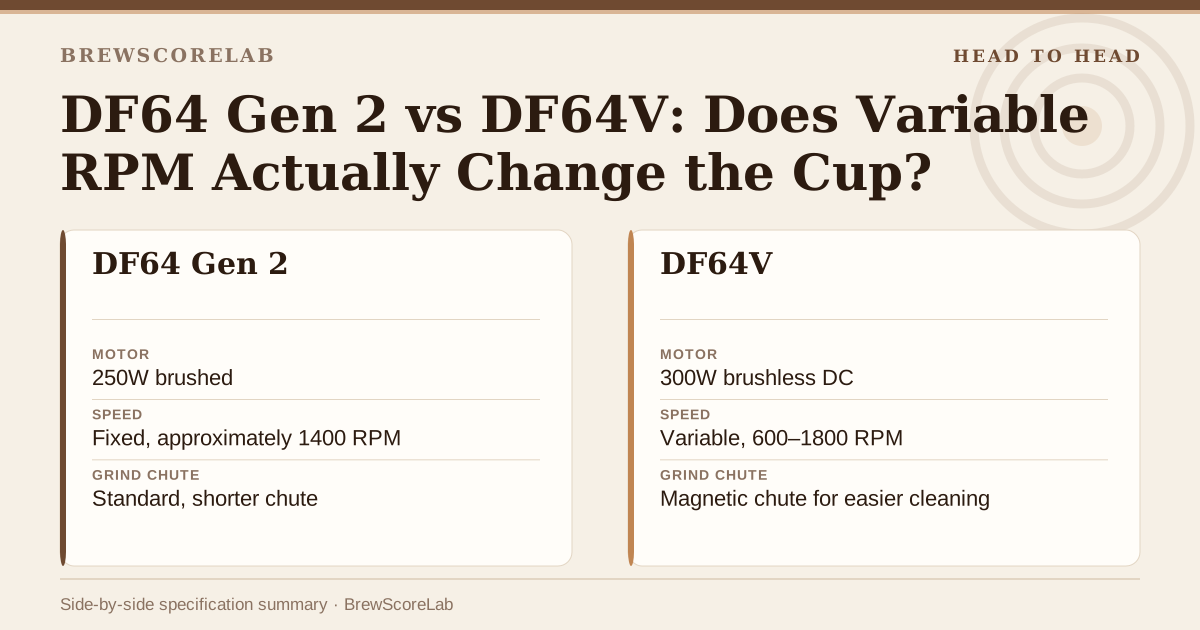
The DF line has multiplied to the point where the model name is the hardest part of the purchase. The two that most people end up choosing between are the DF64 Gen 2 and the DF64V, and the confusing part is that they share the component that matters most — the burrs. What separates them is the motor, the footprint and the noise.
Quick Answer
Buy the DF64 Gen 2 if you want the same grind quality for less and you have the counter space — it runs the identical 64mm DLC flat burrs at a fixed 1400 RPM and grinds a double dose in roughly 7–11 seconds. Buy the DF64V if you want to experiment with grind speed, want the quieter machine, or are tight on counter space — its brushless motor runs from 600 to 1800 RPM, and lower speeds produce fewer fines and more clarity in the cup. Same burrs means the baseline shot is the same; you are paying for control and refinement, not for better espresso out of the box.
At a Glance
| Feature | DF64 Gen 2 | DF64V |
|---|---|---|
| Burrs | 64mm DLC-coated flat | 64mm DLC-coated flat |
| Motor | 250W brushed | 300W brushless DC |
| Speed | Fixed, approximately 1400 RPM | Variable, 600–1800 RPM |
| Adjustment | Stepless micrometric, 90 marked settings | Stepless micrometric, 90 marked settings |
| Anti-popcorn | Yes | Yes |
| Static control | Plasma generator | Plasma generator |
| Retention | Under 0.1g | Under 0.1g |
| Grind chute | Standard, shorter chute | Magnetic chute for easier cleaning |
| Noise | Louder | Noticeably quieter |
| Footprint | Larger, more industrial | More compact |
| Current revision | Sold as V2.5 | Later revisions in circulation |
The Burrs Are the Same, So Start There
Both grinders run 64mm flat burrs with a Diamond-Like Carbon coating. DLC is the meaningful upgrade over plain stainless: the coating is claimed to last up to ten times longer, and the edge stays sharp long enough that grind consistency does not quietly degrade over a couple of years of daily use.
Because the burrs are identical, the particle distribution they produce at the same speed is identical. Retailers who sell both say the same thing plainly — with the same burrs, the in-the-cup result is the same. That single fact should reset the way you shop this pair. You are not choosing between a good grinder and a better one. You are choosing between two bodies wrapped around the same grinding engine.
One thing to check on the listing: the Gen 2 is also sold with plain stainless burrs on some configurations. If you want the two machines to be genuinely equivalent, confirm the DLC set is what is in the box.
What Variable RPM Actually Does
This is the reason the DF64V exists, and it deserves a straight answer rather than marketing.
Burr speed changes the fines content of the grind. Running slower produces fewer fines, which reads in the cup as more clarity and separation and a lighter body. Running faster produces more fines, which reads as more body and texture. Neither is objectively better — they are two different cups from the same beans and the same burrs.
In practice that means the DF64V gives you a second dial. Light-roast filter where you want the florals to come forward? Run it slow. Dark-roast espresso where you want a heavy, syrupy shot? Run it fast. The DF64 Gen 2 sits at a fixed 1400 RPM, which is a sensible middle setting and the one most people would land on anyway.
The honest framing: variable speed is a feature for people who already know how to dial in espresso and want another variable to play with. If you are still learning grind size, dose and time, a fourth variable is a distraction, not an upgrade.
Noise, Size and Cleaning
These are the differences you live with every day, and they favour the DF64V.
The brushless motor is quieter. If you grind at 6am in an apartment with thin walls or a sleeping household, that is not a minor point — it is arguably a bigger quality-of-life difference than the RPM range. The DF64V is also the more compact of the two, with a smaller footprint that suits crowded counters, while the Gen 2 is chunkier and reads more industrial.
Cleaning goes to the DF64V as well, thanks to a magnetic grind chute that comes away easily. The Gen 2’s shorter chute is fine, but it is more fiddly when you are switching between roasts and want the path genuinely clear.
Both include an anti-popcorn arrangement to stop beans bouncing on top of the burrs, both use a plasma generator to kill static, and both hold retention under 0.1g — which is the number that actually matters for single dosing. Neither needs the water-spritz workaround that plagued earlier single-dose grinders, and both ship with bellows.
Speed and Workflow
The DF64 Gen 2 grinds at roughly 1–2.1 grams per second, so a double espresso dose clears in about 7–11 seconds. That is fast enough that grind time never becomes the bottleneck in a morning routine.
The DF64V at its top speed of 1800 RPM will be quicker still; at 600 RPM it will be considerably slower. That is worth knowing before you commit to running everything at low speed for the clarity — you will feel the extra seconds every day. Most owners settle into one or two saved speeds rather than adjusting per shot.
Either way, both are single-dose grinders, which means you weigh beans in, grind, and get nearly all of them back. If that workflow is new to you, our guide to the best single dose grinders for espresso explains why it changes how you buy coffee.
How They Compare to the Alternatives
The DF64 platform’s most common rival is the Niche Zero, which Niche builds around 63mm conical burrs and a much simpler feature set — we lay that out in Niche Zero vs DF64 and in our Niche Zero review. The short version: flat burrs like these tend toward clarity and separation, conicals toward body and sweetness, and the DF64V’s low-RPM setting pushes even further into flat-burr territory.
Against stepped grinders in the same bracket, both DF models win on adjustment resolution — 90 marked settings on a stepless collar is a different class of control from clicked steps, as our DF64 vs Eureka Mignon Specialita comparison covers. If neither DF model fits the budget, our shortlist of value-tier espresso grinders is the right place to work from.
Who Should Buy Which?
Choose the DF64 Gen 2 if you:
- Want the same DLC burrs and 90-setting stepless adjustment for less
- Grind espresso almost exclusively and don’t want a speed dial to fiddle with
- Have counter space and don’t mind a louder grinder
- Would rather put the difference toward better beans or a scale
Choose the DF64V if you:
- Brew both espresso and filter and want to tune grind character per method
- Grind early or late and need the quieter brushless motor
- Have a tight counter and want the smaller footprint
- Like the magnetic chute and the easier clean-up between roasts
FAQ
1. Is the DF64V worth it over the DF64 Gen 2? It is worth it for the quieter motor, the smaller footprint and the easier cleaning — and for variable RPM if you brew more than one way. It is not worth it if you expect better espresso from the same burrs, because you will get the same espresso.
2. Does changing RPM really change how the coffee tastes? Yes, but subtly and in a specific direction. Lower speeds produce fewer fines, which comes through as more clarity and less body. Higher speeds produce more fines and a heavier, more textured cup. It is a tuning tool, not a quality upgrade.
3. Do the DF64 Gen 2 and DF64V use the same burrs? Both are offered with the same 64mm DLC-coated flat burrs. Check the listing on the Gen 2 — some configurations ship with plain stainless burrs instead, which changes the comparison.
4. Which one is quieter? The DF64V, by a clear margin. Its brushless DC motor is noticeably quieter than the Gen 2’s brushed motor, which is the main reason apartment dwellers pick it.
5. Are these good for filter coffee as well as espresso? Both handle both — the stepless collar covers espresso through pour-over without drama. The DF64V has the edge for a mixed workflow because you can drop the speed for filter and raise it for espresso.
6. What does V2.5 mean on DF64 Gen 2 listings? It is the current running revision of the Gen 2 rather than a separate model. The DF line iterates quietly, so it is worth confirming the revision and burr set with the seller before ordering.
7. Do I need bellows or RDT with these? Neither is essential. Both use a plasma generator to neutralise static and hold retention under 0.1g, and both ship with bellows for clearing the chamber.
Conclusion
The DF64 Gen 2 and DF64V share the part that determines how your coffee tastes: 64mm DLC flat burrs on a 90-setting stepless collar with sub-0.1g retention. What the DF64V adds is control and refinement — a 600–1800 RPM range for shifting between clarity and body, a quieter brushless motor, a smaller body and a magnetic chute. If you grind espresso, want the best value, and have the counter space, take the Gen 2 and spend nothing more. If you brew multiple methods, grind at unsociable hours, or simply want the nicer object on the counter, the DF64V earns its premium — just not by making better espresso. For where both sit against the broader field, our best burr grinders for espresso roundup puts them in context.