Lelit Bianca V3 Review
Lelit Bianca V3 Review: The Ultimate Espresso Machine for Coffee Enthusiasts
Quick Answer
The Lelit Bianca V3 is my top pick for espresso enthusiasts who want serious control over their coffee. Lelit’s own Bianca page covers the dual boiler and PID setup that deliver the kind of precision you’d find in high-end cafés. Yes, it’s pricey, but if you’re ready to get nerdy about espresso, this machine won’t hold you back.
Our Top Picks
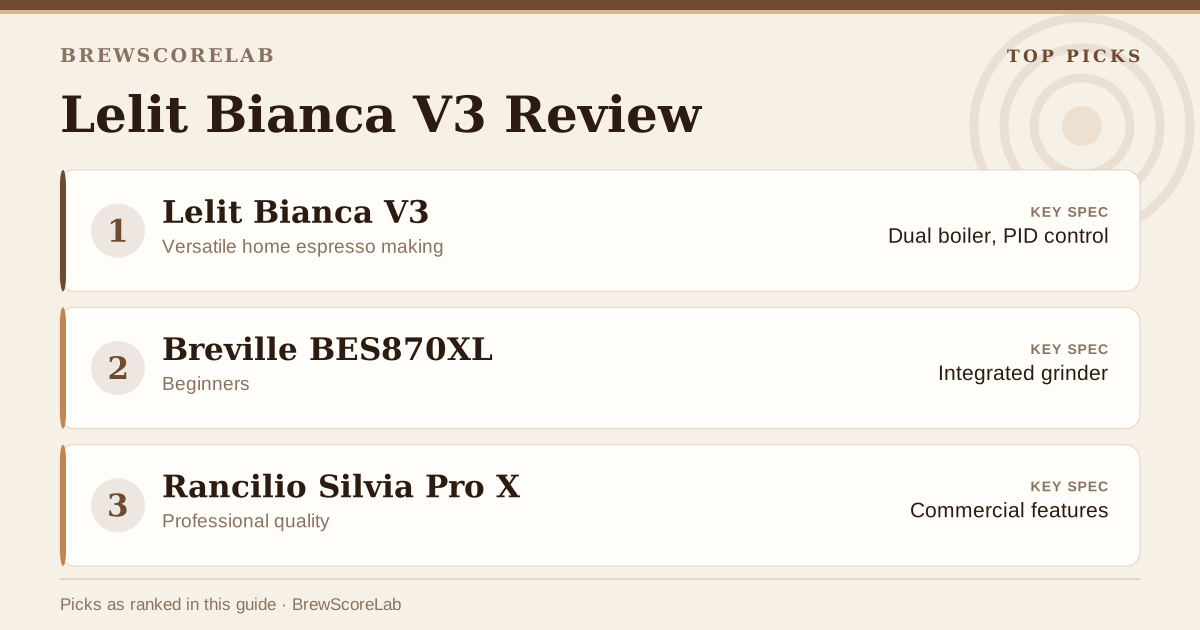
| Product | Best For | Key Spec | Price Tier |
|---|---|---|---|
| Lelit Bianca V3 | Versatile home espresso making | Dual boiler, PID control | Premium |
| Breville BES870XL | Beginners | Integrated grinder | Budget |
| Rancilio Silvia Pro X | Professional quality | Commercial features | Mid-range |
| Gaggia Classic Pro | Budget-friendly espresso | Stainless steel design | Budget |
| De’Longhi La Specialista | All-in-one convenience | Sensor grinding | Mid-range |
Detailed Reviews
Lelit Bianca V3
Overview
This is the machine that made me realize I’d been drinking mediocre espresso for years. The Bianca V3 is built for people who want to geek out over pressure profiling and temperature curves—and actually taste the difference.
Key Specs
- Boiler Type: Dual boiler
- PID Temperature Control: Yes
- Dimensions: 12.5” x 15.5” x 16.5”
- Weight: 63 lbs
- Price Tier: Premium
Pros
- Temperature stays rock-solid thanks to PID control
- Stainless steel construction feels bulletproof
- Manual pressure profiling lets you experiment with advanced techniques
Cons
- That price tag will make your wallet cry
- Steep learning curve—not exactly plug-and-play
Best For Whom
Get this if you’re already pulling decent shots and want to push your skills further. Skip it if you just want decent coffee without the fuss. If Breville’s flagship is also on your shortlist, see how the Breville Dual Boiler holds up against the Bianca.
Breville BES870XL
Overview
The Breville is espresso training wheels in the best possible way. Built-in grinder, simple controls, and forgiving operation make this the obvious choice for newcomers.
Key Specs
- Boiler Type: Single boiler
- Integrated Grinder: Yes
- Dimensions: 13.2” x 12.5” x 15.8”
- Weight: 15.5 lbs
- Price Tier: Budget
Pros
- Dead simple to use right out of the box
- Built-in grinder saves counter space and money
- Price won’t break the bank
Cons
- Single boiler means you’ll wait between shots and steaming
- Build quality is good but not heirloom-level
Best For Whom
Perfect starter machine. Get your technique down on this, then upgrade later if you catch the espresso bug—the Lelit Elizabeth and Breville Dual Boiler comparison covers the usual next step up.
Rancilio Silvia Pro X
Overview
The Silvia Pro X surprised me. It brings serious commercial-grade features without the Bianca’s price tag, though you’ll give up some of the finer controls.
Key Specs
- Boiler Type: Dual boiler
- PID Temperature Control: Yes
- Dimensions: 12.5” x 14” x 15.5”
- Weight: 40 lbs
- Price Tier: Mid-range
Pros
- Built like a tank—this thing will outlast your kitchen
- Dual boiler efficiency without the premium price
- Shot timer keeps you consistent
Cons
- Still expensive for most home users
- Overkill if you only drink coffee occasionally
Best For Whom
Sweet spot for intermediate users who want pro features but can live without manual pressure profiling.
Gaggia Classic Pro
Overview
The Classic Pro is espresso’s Honda Civic—reliable, affordable, and gets the job done. Don’t expect bells and whistles, but it’ll teach you proper technique.
Key Specs
- Boiler Type: Single boiler
- Integrated Grinder: No
- Dimensions: 9.5” x 14.2” x 16.5”
- Weight: 20 lbs
- Price Tier: Budget
Pros
- Cheapest entry into real espresso territory
- Simple, durable design that’s easy to fix
- Forces you to learn proper technique
Cons
- You’ll need to buy a separate grinder
- Basic features might feel limiting over time
Best For Whom
Great first machine if you want to learn without spending big. Just budget for a decent grinder too.
De’Longhi La Specialista
Overview
De’Longhi tries to split the difference between convenience and quality. It mostly succeeds, though some corners feel cut to hit the price point.
Key Specs
- Boiler Type: Dual boiler
- Integrated Grinder: Yes
- Dimensions: 16.9” x 11.8” x 14.2”
- Weight: 60 lbs (27.2 kg)
- Price Tier: Mid-range
Pros
- Sensor grinding takes some guesswork out of dosing
- Steam wand produces decent microfoam
- User-friendly without dumbing everything down
Cons
- Build quality feels a bit plasticky for the price
- Some reliability issues reported after heavy use
Best For Whom
Good middle ground if you want convenience but don’t trust super-automatic machines.
How We Evaluated
We compared these machines on what actually matters:
- Performance: How good is the espresso, and how well does it steam milk?
- Noise Level: Will it wake up the whole house at 6 AM?
- Maintenance Cost: Are you locked into expensive proprietary parts?
- Room Size: Does it actually fit on a normal counter?
- Value for Money: Do the features justify the price tag?
Buying Guide
Here’s what really matters:
- Type of Boiler: Dual boilers let you steam and brew simultaneously. Single boilers make you wait—annoying but manageable. There’s a middle path too: heat exchanger espresso machines brew and steam at once for less money than a true dual boiler.
- Integrated Grinder: Saves space and money upfront, but dedicated grinders usually perform better.
- Temperature Control: PID controllers keep temps consistent. Worth the extra cost if you’re serious.
- Size and Weight: That 63-pound Bianca isn’t moving once you place it. Measure twice, buy once.
- Budget: Be honest about what you’ll actually use. A $2,500 machine gathering dust helps nobody.
FAQ
1. Is the Lelit Bianca V3 suitable for beginners? Not really. Start with something simpler and work your way up. The Bianca rewards skill—it won’t make bad technique taste good.
2. How often do I need to clean the espresso machine? Rinse after every use, deep clean monthly. Skip this and you’ll taste it in your coffee.
3. Can I use any coffee beans with these machines? Sure, but fresh-roasted beans make a huge difference. Grocery store beans will limit what any machine can do.
4. What is the difference between single and dual boiler machines? Single boilers switch between brewing and steaming temperatures. Dual boilers maintain both simultaneously—much more convenient.
5. Are replacement parts expensive for these machines? Higher-end machines cost more to maintain, but they’re also built to last longer. The cheap machines often cost more long-term.
The Lelit Bianca V3 stays my top recommendation for serious home baristas. It’s expensive, but if precision espresso is your thing, this machine delivers the goods. Profitec publishes comparable specs for its own prosumer line. Its closest rival at the price is the Profitec Pro 700, and that head-to-head comes down to whether flow control is something you’ll actually use.