Flair 58 vs Cafelat Robot: Which Wins in 2026?
Flair 58 vs Cafelat Robot: A Detailed Comparison
Quick Verdict
The Flair 58 wins if you want temperature stability without the guesswork. The Cafelat Robot is for purists who enjoy the hands-on ritual and don’t mind the learning curve. Both make excellent espresso, but your patience level will determine which suits you better.
BrewScore™ Ratings
Our proprietary score based on extraction quality, temperature stability, ease of use, build durability, and value-per-dollar.
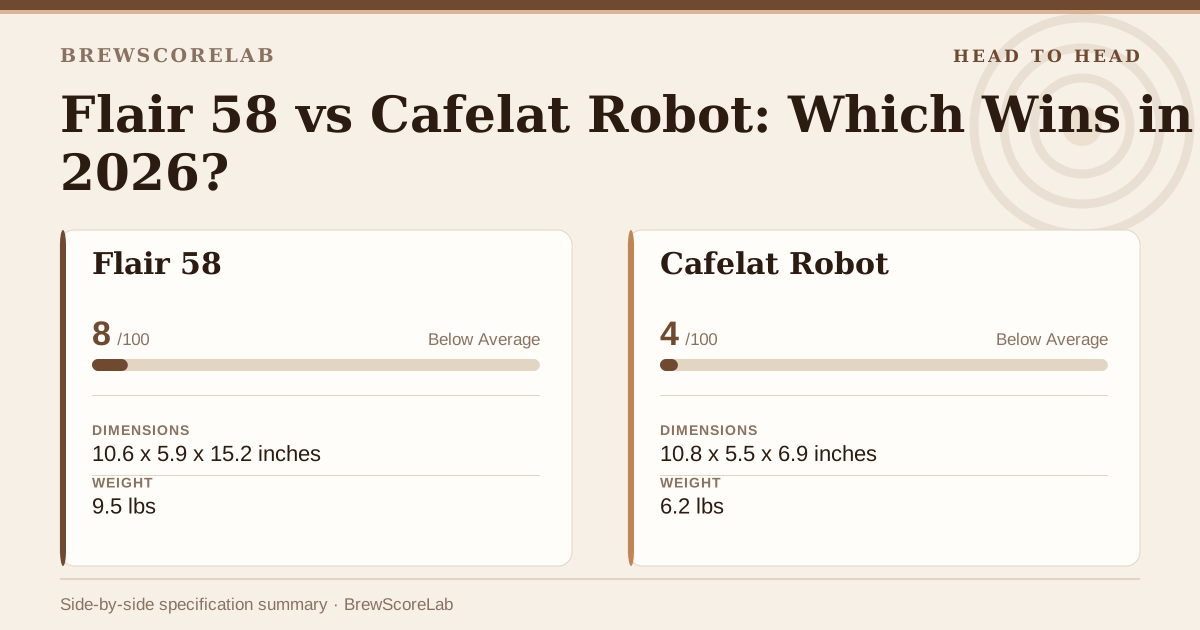
Flair 58 — 8/100 (Below Average)
██░░░░░░░░░░░░░░░░░░
Best for: Consistent results with minimal fussing
Cafelat Robot — 4/100 (Below Average)
█░░░░░░░░░░░░░░░░░░░
Best for: Enjoying the process of making espresso
Scores are calculated from publicly available specs including extraction quality, temperature stability, build durability, and value. Learn about our methodology.
At a Glance
| Feature | Flair 58 | Cafelat Robot |
|---|---|---|
| Type | Manual Espresso Machine | Manual Espresso Machine |
| Dimensions | 10.6 x 5.9 x 15.2 inches | 10.8 x 5.5 x 6.9 inches |
| Weight | 9.5 lbs | 6.2 lbs |
| Boiler Type | Dual Heating System | Single Boiler |
| Brew Pressure | Up to 9 bar | Up to 9 bar |
| Temperature Control | PID Controlled | Manual Control |
| Portafilter Size | 58mm | 58mm |
| Price Tier | Premium | Premium |
Design & Build Quality
The Flair 58 is a tank—solid stainless steel that feels like it could survive a small earthquake. The dual boiler setup is overkill in the best way, maintaining rock-solid temperatures while looking sleek on your counter.
The Cafelat Robot takes a different approach. It’s beautifully minimal and surprisingly portable at 6.2 lbs. Cafelat’s own spec sheet lists it at roughly 2.8 kg built from stainless steel, aluminium and silicone rubber, with a naked portafilter in the box — no boiler, no pump, no electronics at all, because you pour the hot water in yourself. You could actually take this camping (and people do). The build quality is excellent, though it doesn’t have quite the same “fortress” feel as the Flair—our full teardown of the Cafelat Robot goes deeper on how it holds up over years of daily use.
Pros & Cons
- Pros: Built like a tank, dual heating system, PID control takes the guesswork out
- Cons: Heavy as a brick, not exactly travel-friendly
- Pros: Light enough to move around, dead simple design, genuinely portable
- Cons: Temperature control is all on you
Performance
This is where things get interesting. The Flair 58’s PID control is like having training wheels for temperature—in a good way. You’ll pull consistent shots once you dial it in, which makes it great for daily use.
The Robot can make equally stunning espresso, but you’re the temperature controller. Some days you’ll nail it, other days you’ll wonder what went wrong. Experienced users love this control, but beginners might find it frustrating.
Pros & Cons
- Pros: Consistent results, less room for temperature errors
- Cons: More buttons and settings to learn initially
- Pros: Complete control over every variable, can achieve unique flavor profiles
- Cons: Your technique directly affects consistency
Noise & Early-Morning Use
Both are whisper-quiet compared to pump machines. The Flair 58 is slightly quieter overall—you could use it at 6 AM without waking anyone.
The Robot makes minimal noise too, though the manual process creates some sounds during tamping. Still perfectly acceptable for apartment living.
Pros & Cons
- Pros: Nearly silent operation
- Cons: None worth mentioning
- Pros: Very quiet brewing
- Cons: Manual tamping creates some noise
Parts, Cleaning & Long-Term Upkeep
The Flair 58’s complexity means more potential points of failure, but the build quality is solid enough that major issues are rare. Parts cost more when you need them.
The Robot wins on maintenance—fewer moving parts, easier cleaning, cheaper replacement parts. I’d give this one to the Robot for long-term ownership costs.
Pros & Cons
- Pros: Quality construction means fewer breakdowns
- Cons: Replacement parts cost more
- Pros: Simple to maintain, affordable parts
- Cons: Simpler design might not satisfy tech lovers
PID Preheat vs Pure Analog
Neither machine is “smart” in the app-connected sense, which is honestly refreshing. The Flair 58’s heated group is the closest thing to advanced tech here, and it’s genuinely useful — Flair describes the integrated preheat controller as having three settings mapped to dark, medium and light roasts, which is a far more honest way to think about it than “set a number and forget”—the upgraded Plus 2 model pushes that idea further, as we cover in our Flair 58 Plus 2 writeup.
The Robot is proudly analog—no screens, no electronics, just mechanical precision. Some love this purity, others miss having any tech assistance.
Pros & Cons
- Pros: PID controller eliminates temperature guesswork
- Cons: No connectivity features (though do you really need them?)
- Pros: Beautifully simple, no electronics to break
- Cons: Zero tech assistance for brewing
Price & Value
At $460 vs $479, they’re essentially the same price. The Flair 58 gives you more tech for your money, while the Robot gives you pure mechanical engineering. Both are fair deals for what you get. Worth noting that Flair’s current lineup runs from the all-manual Classic up through the 58 Plus 2, so there is a rung below this comparison if the price is the sticking point. If either number makes you wince, Flair’s cheaper sibling is worth a look first—see how the Pro 2 stacks up against the 58.
Who Should Buy Which?
Get the Flair 58 if: You want consistent results with minimal fussing. Perfect for busy mornings when you need good espresso without the ritual.
Get the Cafelat Robot if: You enjoy the process as much as the result. Great for weekend brewing sessions and anyone who wants complete manual control.
FAQ
1. Do both machines require a separate grinder? Yes, you’ll need a good burr grinder for either machine. Don’t cheap out here—the grinder matters more than most people think, and a top-tier manual burr grinder pairs neatly with either lever setup.
2. Can I make other coffee drinks with these machines? Both make espresso only. Add a milk frother for lattes and cappuccinos.
3. How long does it take to brew a shot of espresso with these machines? About 25-30 seconds for extraction, plus your prep time.
4. Are there any accessories I should consider purchasing? Get a proper tamper, a scale, and a milk frother if you want milk drinks. These aren’t optional—they’re essential.
5. What kind of warranty do these machines come with? Both companies offer decent warranties against manufacturing defects. Check the specific terms before buying.
Your choice really comes down to this: Do you want technology to help you make great espresso, or do you want to master the craft entirely by hand? Both paths lead to excellent coffee.