Flair Classic vs Flair Pro 2: Which Manual Lever Wins?
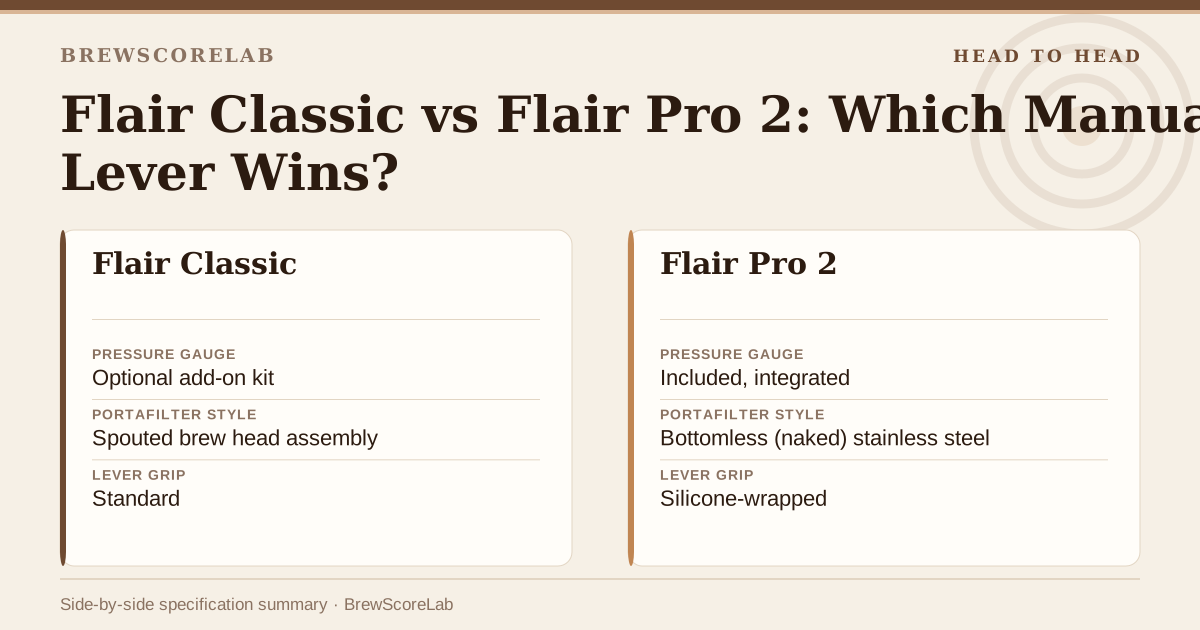
Flair Classic vs Flair Pro 2: Which Manual Lever Should You Buy?
Flair built its reputation on a simple idea: real espresso needs pressure, not electronics. The Classic and the Pro 2 are two rungs of the same ladder—human-powered lever machines that pull genuine espresso with zero cords. The question is whether the Pro 2’s upgrades are worth stepping up for, or whether the Classic already covers what you need.
Quick Answer
The Flair Classic is the right buy if you want the least expensive path into true lever espresso and don’t mind flying blind on pressure. The Flair Pro 2 is worth the step up for most enthusiasts: its integrated pressure gauge turns every shot into feedback, and the bottomless portafilter and larger capacity make it the machine you’re less likely to outgrow. Same core brewing idea—one teaches by feel, the other teaches by feel plus data.
At a Glance
| Feature | Flair Classic | Flair Pro 2 |
|---|---|---|
| Type | Manual lever espresso maker | Manual lever espresso maker |
| Power Required | None | None |
| Extraction Pressure | 6–9 bars (lever controlled) | 6–9 bars (lever controlled) |
| Pressure Gauge | Included on current units | Included, integrated |
| Portafilter Style | Bottomless and flow-control, both included | Bottomless (naked) stainless steel |
| Portafilter Diameter | 40mm | 40mm |
| Dose / Water Capacity | 12–18g, 60ml water, up to 40ml yield | Larger dose and yield |
| Brew Head | Standard Flair brew head | Detachable stainless steel, higher capacity |
| Lever Grip | Standard | Silicone-wrapped |
| Shot Capacity | Smaller doses and yields | Larger doses and yields |
| Preheating | Required (hot water rinse) | Required (hot water rinse) |
| Portability | Packs down, case included | Packs down, case included |
| Milk Steaming | None | None |
| Price Tier | Budget tier | Mid tier |
The Shared DNA
Before the differences, the common ground: both machines are lever presses. You boil water separately, preheat the brew cylinder, load a puck of finely ground coffee, pour in your brew water, and press the lever through a 30-to-50-second extraction. Your arm is the pump; the lever’s mechanical advantage generates the 6–9 bars that espresso demands.
That means both machines share the same virtues—silence, zero maintenance electronics, total control over the pressure curve—and the same demands. You need a kettle, a genuinely espresso-capable grinder (see our hand grinder guide), and a tolerance for ritual. Neither machine steams milk. Both reward attention and punish stale beans, exactly like every manual machine in our best manual espresso maker roundup.
First, a Correction Worth Making
This comparison used to hinge on the Classic lacking instruments. It no longer does. Flair’s current Classic listing includes a pressure gauge in the box along with two portafilters — a bottomless one and a flow-control one — plus a dispersion screen, dosing cup and tamper, dosing funnel and drip tray, all under a 3-year warranty on the cast aluminium stand and stainless brewing head. If you are reading older comparisons (including earlier versions of this one), they describe a configuration Flair has moved past.
That changes the shape of the decision. The gauge and the bottomless view are no longer what you step up for.
Difference 1: What the Pressure Gauge Actually Buys You
Both machines give you one now, so the question is what to do with it. On a lever machine, pressure is technique. Too coarse a grind and the lever sinks with no resistance; too fine and you stall. The gauge converts those mistakes into visible data — you can see yourself drifting out of the 6–9 bar window and correct mid-shot. Learners dial in faster with it, and tinkerers use it deliberately for pressure profiling.
Difference 2: Dose Ceiling, Not Diagnostics
A bottomless portafilter shows you the underside of the basket during extraction — spraying, channeling, dead spots become visible immediately, which is why bottomless is the standard diagnostic tool on prosumer machines too. Both machines have one, so this is a wash.
What is not a wash is capacity. The Classic is specced for a 12–18g dose with 60ml of brew water and up to a 40ml yield. That is a solid single-to-modest-double. Step up and the brew head grows, which is the real reason to spend more.
Difference 3: Capacity and Build
The Pro 2’s brew head is larger, letting you dose more coffee and pull bigger shots—relevant if you drink doubles or make drinks for two. Its detachable stainless steel brew head also holds preheat temperature better than the Classic’s lighter assembly, and the silicone lever grip makes the press more comfortable when you’re leaning into a stiff extraction.
The Classic counters with simplicity and a lower entry cost. Fewer parts, less to preheat, and a workflow that’s marginally faster to set up and tear down. Both pack into included carrying cases, which keeps either machine in the conversation for travel—though for genuinely mobile espresso, the portable espresso maker category plays a different game.
Who Should Buy Which?
Buy the Flair Classic if you:
- Want the least expensive genuine lever espresso experience
- Drink mostly solo shots and value a simpler workflow
- Are testing whether manual espresso suits you before committing
- Can live without pressure feedback (or plan to add the gauge kit later)
Buy the Flair Pro 2 if you:
- Want the pressure gauge’s feedback from day one
- Care about diagnosing shots with a bottomless portafilter
- Pull doubles or brew for two people regularly
- Suspect this hobby is going to escalate (it usually does)
One shopping note: the Pro 2 has been superseded in Flair’s own range. The 49 Pro now occupies that slot, with a 49mm portafilter and redwood handle, a 12–20g dose, an integrated 6–9 bar gauge and a 5-year limited warranty. If you’re buying new rather than hunting a used Pro 2, that’s the machine to compare against the Classic.
If your budget stretches past either, the conversation changes again: the Flair 58 brings a true 58mm format and powered preheat, which we cover in Flair Pro 2 vs Flair 58 and in our Flair 58 Plus 2 review. And if you’re weighing Flair against the other famous lever on the counter, our Cafelat Robot review covers the machine most often cross-shopped with the whole Flair line.
FAQ
1. Is the Flair Classic good enough for real espresso? Yes. With an espresso-fine grind, fresh beans, and proper preheating, the Classic generates the same 6–9 bars of extraction pressure as the Pro 2. The espresso ceiling is set by your grinder and technique, not the frame.
2. Does the Flair Classic come with a pressure gauge? On current units, yes — Flair lists a pressure gauge as included, along with bottomless and flow-control portafilters. Older Classic units sold without one, and Flair offered a pressure kit as an add-on, so check what you’re actually buying if you’re shopping the used market.
3. Do either of these machines make milk drinks? Not by themselves. Neither has a steam wand, so cappuccinos and lattes require a separate milk frothing solution. The espresso itself makes an excellent base.
4. How long does a shot take on a Flair? Budget several minutes end to end: boiling water, preheating the brew head, grinding, loading, and the press itself. The extraction is under a minute; the ritual around it is the real time cost.
5. Which one is better for travel? Both disassemble into included cases and need no electricity, so both travel well. The Classic’s simpler, lighter assembly gives it a slight edge for frequent packers.
Conclusion
The Flair Classic and Pro 2 pull the same fundamental shot—the difference is how much the machine tells you while you pull it. The Classic is the honest minimum: lever, pressure, espresso, done, at the friendliest tier in the lever world. The Pro 2 adds the instruments—gauge, bottomless view, bigger capacity—that turn each shot into a lesson. If budget rules, the Classic will not disappoint. If you already know you’ll be chasing better shots next month, the Pro 2 is the one to buy the first time.